
How to Switch Dog Food Safely (Step-by-Step Guide)
Switching your dog’s food too quickly can lead to diarrhea, vomiting, gas, or stomach upset. This step-by-step guide will show you how to transition your dog to a new food smoothly—whether you’re switching brands, changing proteins, or upgrading to a sensitive-stomach formula.

Why You Should Transition Slowly
Your dog’s digestive system needs time to adjust to new ingredients. A gradual transition helps:
- Prevent diarrhea and loose stools
- Reduce stomach discomfort or bloating
- Avoid sudden food refusal
- Support gut health and microbiome stability
How Long Should the Transition Take?
The ideal transition time is 7–10 days. Sensitive-stomach dogs may require 14 days or longer.
Step-by-Step Food Transition Schedule
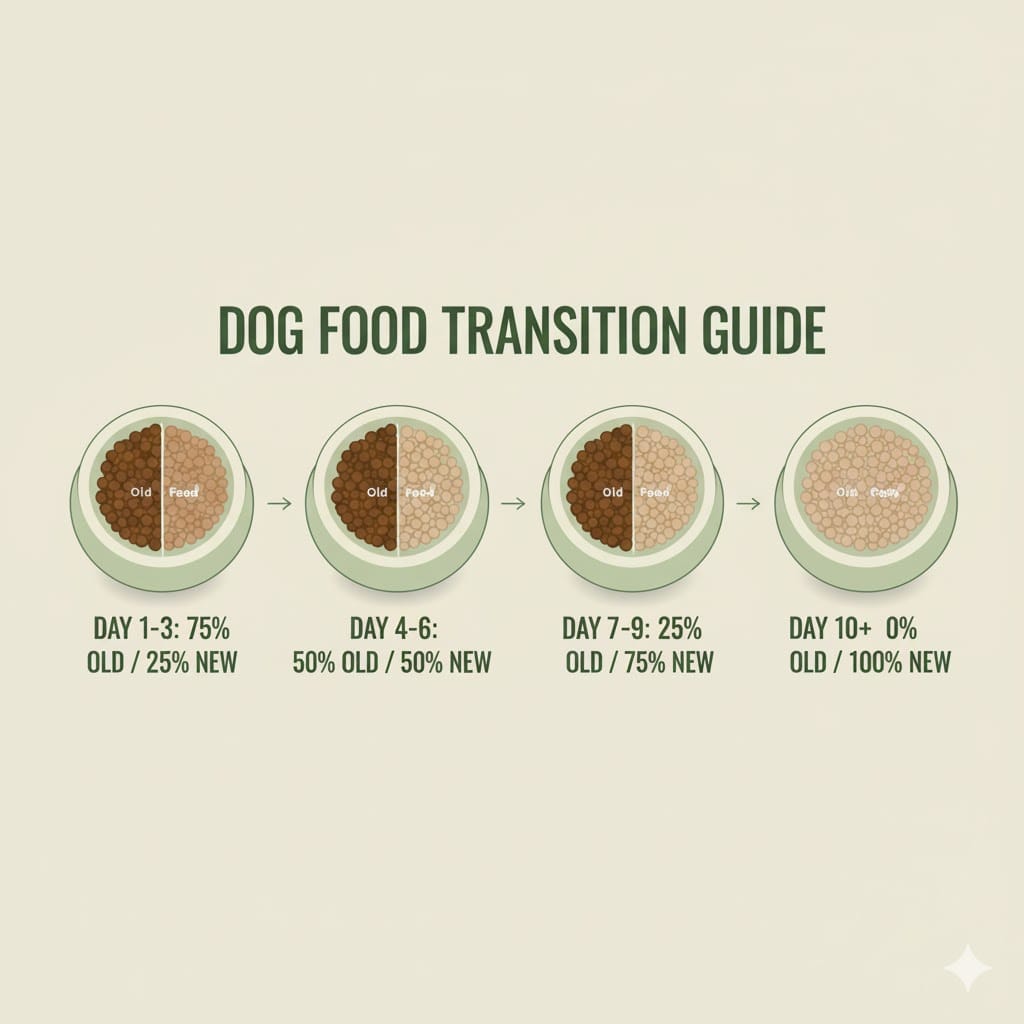
Day 1–2: 75% Old Food + 25% New Food
Start with a small amount of the new food mixed in. Observe your dog’s stool and appetite.
Day 3–4: 50% Old Food + 50% New Food
Increase slowly. If your dog shows mild soft stool, hold this ratio for an extra day.
Day 5–6: 25% Old Food + 75% New Food
Your dog is now adapting to the new ingredients. Continue monitoring digestion.
Day 7–10: 100% New Food
Once stools are firm and appetite normal, complete the transition.
Signs the Transition Is Too Fast
- Diarrhea or very soft stool
- Vomiting
- Excessive gas
- Loss of appetite
- Itchy skin flare-ups (possible allergy)
If symptoms are mild, slow down the transition. If symptoms are severe, go back to the original food and contact your vet.
Tips to Make the Transition Easier
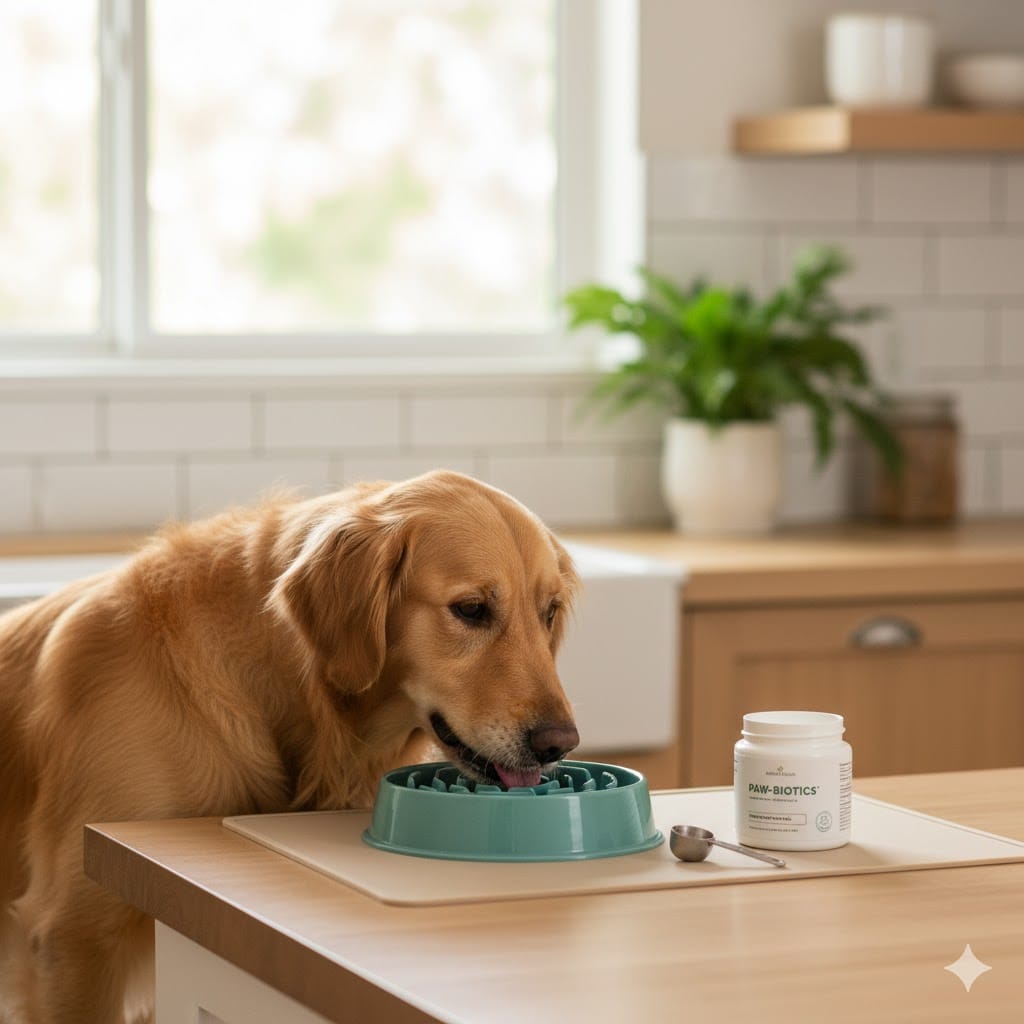
- Add probiotics: Helps stabilize gut bacteria and prevent diarrhea.
- Use digestive supplements: Pumpkin, enzymes, or goat milk can soothe the stomach.
- Keep feeding times consistent: Routine helps digestion.
- Avoid introducing treats during transition: Prevents confusion and digestive stress.
Best Products to Support a Smooth Transition
1. Probiotics Powder for Dogs
Supports digestion and reduces loose stool during food changes.
2. Slow Transition Bowl
Helps dogs who eat too quickly and reduces the risk of vomiting.
3. Limited Ingredient Sensitive-Stomach Dog Food
Ideal for dogs prone to digestive issues or allergies.
When to Contact a Vet
Seek professional advice if you notice:
- Blood in stool
- Vomiting lasting more than 24 hours
- Severe lethargy
- Weight loss
- Persistent diarrhea
Final Thoughts
Switching dog food doesn’t have to be stressful. Follow a gradual schedule, use digestive support products, and monitor your dog’s symptoms. With patience and the right approach, your dog can transition smoothly and enjoy their new food.