
Best Slow Feeder Bowls for Fast Eaters (2025 Review)
If your dog eats like a “vacuum cleaner,” a high-quality slow feeder bowl is exactly what you need. Eating too quickly can cause:
- Vomiting
- Bloating
- Excessive burping
- Poor digestion
- Increased risk of obesity

This 2025 updated review highlights the safest, most durable, and most effective slow feeder bowls for all dog sizes, along with usage tips and buying advice.
🐶 What Is a Slow Feeder Bowl?
A slow feeder bowl features ridges, mazes, or obstacles inside the bowl to naturally slow down eating speed. Studies show that slow feeders can reduce eating time by 5–10x.
⭐ Top Slow Feeder Bowls of 2025
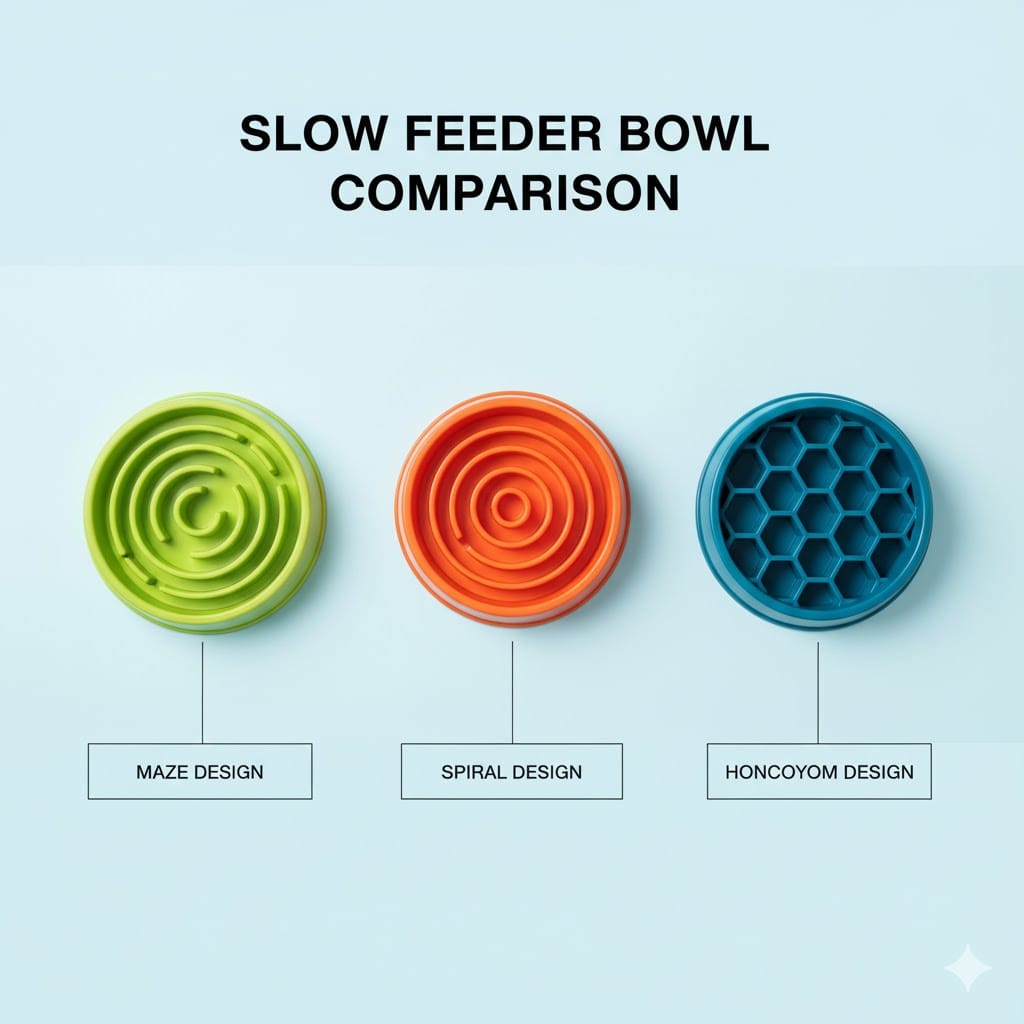
1. Outward Hound Fun Feeder – Best Overall
- Best for: Small, medium, and large dogs
- Material: BPA-free plastic
- Ease of Cleaning: ★★★☆☆ (Dishwasher safe)
Pros:
- Classic maze design slows eating by up to 10x
- Multiple sizes and colors available
- Durable and affordable
Cons:
- Plastic may not withstand heavy chewers
2. JW Skid Stop Slow Feeder – Best for Big Eaters
- Best for: Medium to large dogs
- Material: Rubber base + reinforced plastic
- Ease of Cleaning: ★★★★☆
Pros:
- Deep grooves ideal for “food inhalers”
- Non-slip bottom prevents movement
Cons:
- Grooves may be too deep for small dogs
3. Neater Slow Feeder – Best for Short-Nosed Breeds
- Best for: All breeds, especially brachycephalic dogs (Pugs, Bulldogs, Frenchies)
- Material: Durable, non-slip plastic
Pros:
- Shallow design helps short-nosed dogs reach food easily
- Less frustration compared to maze bowls
Cons:
- Not as slow as maze-style feeders
4. Lick Mat – Best for Wet Food or Anxious Dogs
Best for: Wet food, canned food, rehydrated freeze-dried meals
Pros:
- Significantly slows down eating
- Helps reduce anxiety and keeps dogs calm
- Great for sensitive stomachs
Cons:
- Not ideal for dry kibble (may spill easily)
🍽️ How to Choose the Right Slow Feeder
1. Dog Size
- Small dogs: Shallow bowl with simple maze
- Large dogs: Deep grooves + non-slip bottom
2. Food Type
- Dry kibble: Maze bowls work best
- Wet food: Lick mats are more suitable
3. Material Safety
- BPA-free plastic
- Silicone
- Stainless steel (best for heavy chewers)
🔥 How to Introduce a Slow Feeder Successfully
- Start by placing small treats inside the bowl to encourage exploration.
- Choose an easier design for beginners.
- Gradually increase the amount of food.
- If your dog gets frustrated, mix in some wet food for encouragement.
📌 Frequently Asked Questions
Q1: Should my dog use a slow feeder every day?
In most cases, yes—especially if your dog eats too quickly or vomits after meals.
Q2: What if my dog refuses to use a slow feeder?
Try a simpler design or switch to a shallow slow feeder or lick mat.
🎉 Final Recommendations
Best for first-time buyers: Outward Hound Fun Feeder
Best for extremely fast eaters: JW Skid Stop Slow Feeder
Best for short-nosed breeds: Neater Slow Feeder
Best for wet food: Lick Mat
Choosing the right slow feeder can significantly improve digestion, reduce vomiting, and support long-term health.